


Word of the Day
Word of the Day
/bo.tã/
Base function
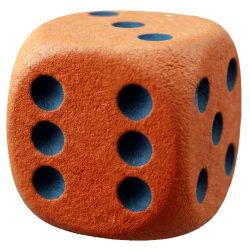
Designate a flat, filled circular shape, or an object that presents this configuration.
By semantic extension, designate a small piece used to fasten, unite, close or decorate parts of clothes, bags, suitcases and other similar objects.
Detailed definition
botã It has two main, historically related meanings:
1. Disk
Circular, flat and predominantly filled surface or object, the internal area of which constitutes a material or visually continuous surface.
Its semantic core is:
roundness → filling → shape closure
Unlike a circle understood as a contour or rim, botã represents a filled circular shape.
The word can designate:
-
a disk of rigid or flexible material;
-
a flat circular piece;
-
a round, filled surface;
-
a coin or similar object, when its shape is the highlighted aspect;
-
a phonographic record and, by contextual extension, a musical album;
-
a discoid geometric configuration.
As an adjective, it can correspond to “disc-shaped”, “discoid” or “disc-shaped”.
2. Clothing or accessory button
Small part incorporated into a garment or accessory, generally used to join, fasten or close parts of its structure.
The meaning developed from the flattened circular shape characteristic of traditional buttons.
botã can designate buttons from:
-
shirts and t-shirts;
-
pants and shorts;
-
coats and jackets;
-
dresses and skirts;
-
bags, backpacks and suitcases;
-
other objects that use equivalent parts for fixing or closing.
Includes sewn-on buttons, shank buttons, snap buttons and other closure designs.
It also covers ornamental buttons integrated into clothing and accessories, even when they do not have a practical closing function.
The word does not require the button to be circular.
Square, rectangular, oval or decorative shaped buttons continue to be botã, as the specialized meaning came to identify a functional and conventional category of objects, regardless of the original geometry.
Uses
1. Geometric shape
Designates a filled circular region, distinguishing it from an empty circular contour.
2. Discoid object
Designates flat objects or pieces whose circular shape constitutes a relevant characteristic.
3. Close button
Designates small parts used to fasten or join parts of a garment or accessory.
The fixation method may vary depending on the object.
4. Ornamental button
Designates parts recognized as buttons that perform a decorative function, even without directly participating in closing.
5. Musical album
By contextual extension, it can designate a disc used to record or reproduce music and, metonymically, the associated musical album.
6. Qualifying form
It can characterize something that has a configuration similar to that of a disk.
In this job, it allows constructions with yes, mode particle, to express “disc-shaped”.
Contrast
bəhula — circle; hoop; ring; hollow circular shape.
Its core is in circular configuration with a characteristic central void.
botã — disk; filled circular shape; clothing button or accessory.
Its geometric core is in the filled circular area. In the specialized sense, it designates a piece of clothing or accessory, regardless of its shape.
bohrō — ball; globe; ball.
It represents a three-dimensional rounded shape, the volume of which constitutes the main property.
tacatɔ - plate; rigid flat surface.
It does not require a circular shape. It can designate square, rectangular plates or other configurations.
mokauh — control button, switch or activation.
Designates a device used to produce a command or activate a mechanism.
The distinction between botã and mokauh is functional:
-
botã fastens, joins, closes or decorates parts of clothes and accessories.
-
mokauh allows you to activate, control or command a mechanism.
A press button used to close a bag is botã, even if it needs to be pressed to work.
A button used to turn on a device is mokauh, even though it has a circular and flat shape.
Limits and usage note
In the geometric sense, botã represents a predominantly filled form.
However, small perforations do not necessarily ruin a disc.
A shirt button with two or four holes is still botã, as these openings serve for fixation and do not constitute the central void characteristic of bəhula.
In the specialized sense of button, the circular format is no longer mandatory.
The word can be applied to buttons of different shapes, materials and manufacturing techniques.
botã does not automatically designate any closing mechanism. Zippers, drawstrings, buckles and other systems have their own characteristics and should not be classified as buttons just because they also allow you to close an object.
In the same way, botã does not replace mokauh in the name of the control buttons.
The distinction remains even when the objects have similar shapes.
Equivalences in Portuguese
Main: disc, clothing button, accessory button.
Contextual: discoid shape, phonograph record, musical album, shirt button, trouser button, coat button, bag button, suitcase button, snap button, ornamental button.
botã is a phonoiconic formation composed of two elements associated with roundness and closure.
Stew/ — Roundness; circular body; rounded shape.
It evokes the perception of a curved shape that is organized around a central region.
It is related to the phonoiconic field of bohrō, “ball; globe; sphere”, although botã present a flattened, non-spherical configuration.
so /tã/ — Limit reached; closure; closure.
It relates to cup, “finish; until; reach the limit”.
It represents the sensation of a form that has reached its limit and is complete, without a central opening that characterizes it as a rim.
Original formation
bo + tã → botã
Conceptual development is:
roundness → limit reached → filled circular shape → disc
The original phonoiconic image is that of a round and complete surface, such as a coin, a lid or a circular plate.
While bəhula highlights the contour with empty space, botã highlights the filling of the delimited area.
Semantic extension for button
The flattened circular shape of many traditional buttons has led to a specialization of the original meaning.
Historical development can be represented by:
disc → small disc incorporated into a garment → fastening and closing piece → button
Later, the meaning began to encompass buttons of different shapes, as their functional identity became more important than their geometric shape.
The element so, originally associated with shape closure, finds an additional correspondence in the function of closing a garment or accessory.
This association reinforces the motivation for semantic extension, without requiring a new etymological composition.
Therefore, botã constitutes a single polysemic lexeme, with historically related meanings.
It is not necessary to create an independent word for each type of clothing button or accessory.
- Botã tɔ.
There is a disk. - Wa s̆u kapomo botã.
I made one disk. - Huha tɔuh botã sah ẽcẽ.
Air does not pass through disk. - Botã bəhula ẽcẽ.
Disk It's not a circle. - Botã tacatɔ ūcɛ.
Disk It's a type of plate. - Wa s̆u ys̆ika ūns̆im botã sī.
I saw something in disk/discoid format. - ¡Mā botã tɔli firidri' triğa xō roro!
THE disk That singer is very good! - Botã kcɔ mā lebota mɛ.
Button your shirt.